The Tax Refund Guilt Trip (And How to Ignore It)

Listen...
You haven't even filed yet, but you're already stressed about that refund check.
Because you know what's coming. The articles. The hot takes. The finance bros in the comments telling you that a "wise" person would pay off debt, max out retirement, and invest in index funds.
And sure. That's not wrong. But real talk?
You can't breathe right now.
(That's not a metaphor. I've literally held my breath scrolling through "what to do with your tax refund" listicles, waiting for someone to acknowledge that I have three kids, a car making a noise I can't afford to diagnose, and $47 in my checking account.)
The advice landscape for tax refunds is brutal. It assumes you have options. That your emergency fund is "just a little low" instead of "doesn't exist." That your debt is a manageable snowball instead of an avalanche that's burying you alive.
So let's do something different today.
Let's talk about what to do with your tax refund when you're in the messy middle—not poor enough for emergency assistance, not stable enough for "optimal portfolio allocation." Just... here. Trying to get from Tuesday to Wednesday without a crisis.
The "Right" Answer Is Still Right (But It Might Not Be Right Now)
Here are the things you're "supposed" to do with a tax refund, ranked by how loudly personal finance experts will yell at you if you don't:
- Pay off high-interest debt
- Build an emergency fund
- Invest for retirement
- Save for kids' college
- Make needed home repairs
- Buy something you actually need
Look at that list again. Notice something?
Every single item assumes your immediate survival is handled.
But what if it's not? What if you're choosing between catching up on rent and fixing the car and buying groceries for next week? What if the $2,400 refund check feels less like a windfall and more like a temporary lifeline?
Here's what I want you to hear: You are not failing if you can't follow the "right" order.
The Tax Refund Flowchart for Real Life
Forget the rigid hierarchy. Here's how I actually think about tax refunds in my house:
Step 1: Can you breathe?
Not metaphorically. Literally. Are you facing immediate consequences if you don't spend some of this money right now?
Eviction notice? Utilities about to get shut off? Car about to get repo'd? Kid needs glasses and the prescription expires Friday?
Spend what you need to spend to stop the bleeding.
I don't care if that "should" go to your Visa with 24% APR. You cannot pay off debt from a parking lot because you got evicted.
Step 2: Do you have a starter emergency fund?
Not the "3-6 months of expenses" fund. That's a fantasy for later.
I'm talking about $1,000 in a savings account that you don't touch unless something is actively on fire.
Here's why this matters more than aggressive debt payoff: You cannot pay off debt if you cannot handle a single emergency.
Every time I've tried to throw every extra dollar at my credit card, life has laughed in my face. The water heater. The ER visit. The "mom, I need shoes that fit by tomorrow."
And then I'd end up adding to the credit card because I had no cushion.
The $1,000 starter fund breaks that cycle. It's not about earning interest. It's about staying out of future debt.
Step 3: What's the highest-stress debt?
Not the highest interest. The highest stress.
Maybe it's the credit card that's been maxed out for two years and you can't even look at the statement without feeling sick. Maybe it's the medical bill that's going to collections and showing up on your credit report. Maybe it's the "buy now, pay later" payments that hit every two weeks like clockwork and you never seem to catch up.
Pay off the debt that's waking you up at 3 AM.
The math purists will scream. "But the interest on the other card is higher!"
Fine. They can pay it then. You need to sleep.
The debt you feel the most is costing you more than the interest rate suggests. It's costing you peace. It's costing you bandwidth. It's costing you the ability to think clearly about every other financial decision.
Step 4: What's the "wants" that you've been punishing yourself for wanting?
This is the controversial one. But listen...
If you've been white-knuckling through a budget that allows zero joy for months, your tax refund is permission to buy the thing that makes you feel human.
Not the $900 espresso machine. (Unless that's your Roman Empire, no judgment.)
I'm talking about:
- The $60 hair appointment because your last one was 14 months ago
- The $40 coffee maker because your current one spits grounds into your cup
- The $80 pair of sneakers that don't hurt your feet
- The $25 takeout order that gives you one night off from cooking
The point isn't the thing. The point is reminding yourself that you deserve nice things, even while you're digging out.
Debt payoff is a marathon. You cannot run a marathon if you're already depleted.
The 2026 Tax Refund Reality Check
According to the latest numbers, the average tax refund for families is expected to be larger this year—potentially up to $1,000 more for some households thanks to adjusted credits. The Child Tax Credit maxes out at $2,200 per child, with up to $1,700 refundable even if you owe nothing in federal taxes.
That's real money. And it's coming at a time when most families are using tax refunds for exactly what you'd expect: rent, food, credit card bills.
Not "building wealth." Not "optimizing their portfolio."
Surviving.
If that's you, you're not alone. You're not irresponsible. You're not "bad with money."
You're in a system that requires a $2,400 lump sum to cover gaps that should be handled by livable wages and affordable childcare. That's not a personal failing. That's a policy failure wearing a "personal responsibility" costume.
My Refund Plan (The Messy Truth)
Here's what I'm doing with my refund this year, because I believe in showing the receipts:
$600 → Catching up on utilities (we got behind in January when the furnace died)
$500 → Starter emergency fund (finally getting back to $1,000 after the dental bill last fall)
$400 → Paying off the "buy now, pay later" balance that's been stressing me out
$200 → New shoes for the tiny roommates (they ALL grew, y'all)
$100 → Coffee shop gift card fund (mental health is health)
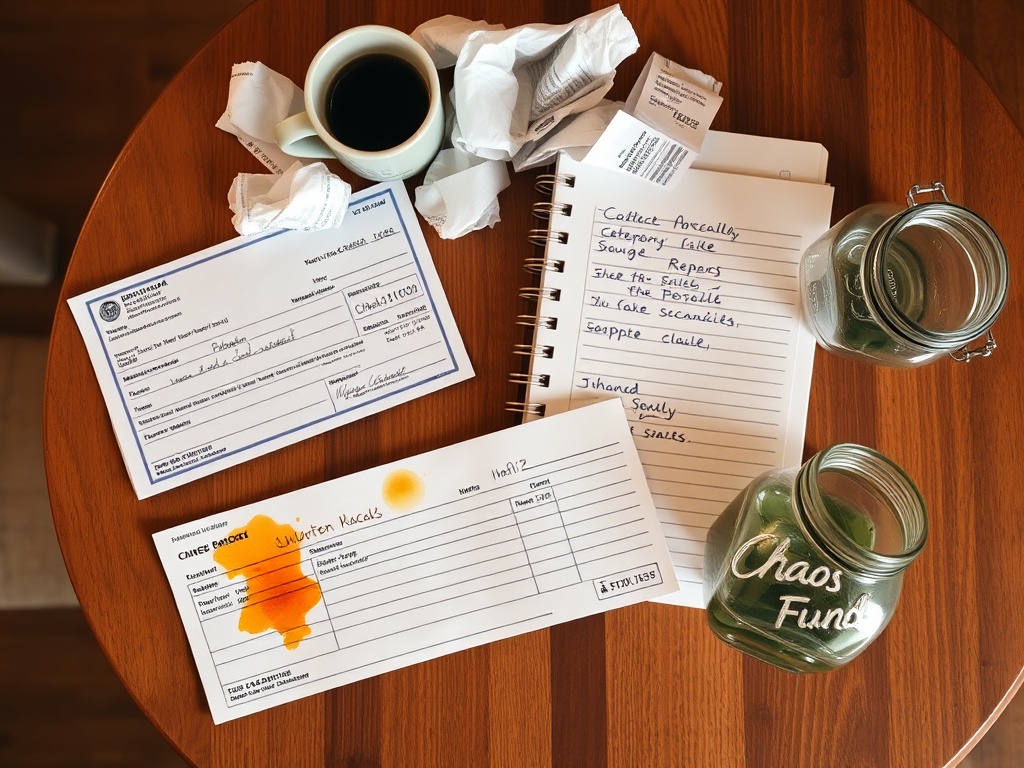
Whatever's left → The "chaos jar" for the next inevitable thing
Is this the "optimal" financial plan? Absolutely not.
Will I sleep better in March than I did in February? Absolutely yes.
The Real Advice
If someone tells you there's only one right way to use a tax refund, they're selling something. Either a course, an ideology, or the fantasy that financial success is about individual choices instead of systemic realities.
The truth? The best use of your tax refund is the use that keeps you moving forward without breaking your spirit.
Sometimes that's aggressive debt payoff. Sometimes it's buying yourself one month of breathing room. Sometimes it's a mix of practical and slightly indulgent because you cannot live on pure obligation.
You get to decide.
You get to prioritize your sanity alongside your spreadsheet.
You get to be messy and imperfect and still call it progress.
Because here's what I know for sure: The moms who "do it wrong" but keep going are the ones who eventually make it. The ones who get paralyzed by doing it perfectly? They stall out.
Don't stall. Just move.
Even if it's messy. Even if it's not what the experts would do. Even if you spend $25 on a latte and a moment of peace.
Your budget doesn't have to be perfect. It just has to be yours.
You've got this.
P.S. - How are you using your tax refund this year? No judgment, no "shoulds." Just real talk in the comments. We're all figuring it out together.